Saratoga, CA · Santa Clara County
Chimney Sweep in Saratoga, CA
If you light a fire most winter evenings, creosote is part of the deal. We sweep wood-burning fireplace chimneys in Saratoga for a fixed $149. This page is for frequent burners: what makes deposits grow faster, how to spot them, and what brushing can and cannot take off. The full service is on the chimney sweep page.
What people get wrong about creosote
- Myth
Creosote only comes from burning pine.
In practiceEvery kind of firewood leaves it. Moisture and the way the fire burns matter more than the species: damp wood and smoldering fires leave more, dry wood burned briskly leaves less. Oak cut from your own lot needs plenty of drying time before it burns cleanly.
- Myth
A really hot fire now and then burns the creosote off.
In practiceThat is how chimney fires start. Deposits on the flue walls are fuel. The goal is to brush them out, not to set them alight.
- Myth
If the fire draws well, the chimney is clean.
In practiceDraft can feel normal while deposits keep growing. The flue narrows slowly, and the first thing most people notice is a smell or a wisp of smoke in the room, not a weaker fire.
- Myth
Closing the damper down keeps the heat in and does no harm.
In practiceA choked-down, smoldering fire sends cooler, smokier gas up the flue, and that gas leaves deposits fastest. An overnight smolder is one of the quickest ways to build creosote.
Chimney sweep for Saratoga homes
Short answerIs there a chimney sweep that serves Saratoga, CA?
Yes. Fresh Air Duct Cleaning sweeps wood-burning fireplace chimneys across Saratoga, from the Village to the hillside streets toward the mountains, for a fixed $149. We are based in neighboring Cupertino. Visits run daily, 7:00 AM to 7:00 PM and the phone answers 24/7. For gas fireplaces, call (415) 980-6169 to confirm first.
Creosote is what is left when wood smoke cools on its way up the flue. Sweeps usually describe it in three forms. The first is loose, flaky soot that brushes off easily. The second is crunchy, tar-like flakes that are harder to shift but still come off with a brush in most chimneys. The third is a hard, shiny glaze, almost like enamel on the flue walls, and a brush alone often will not remove it.
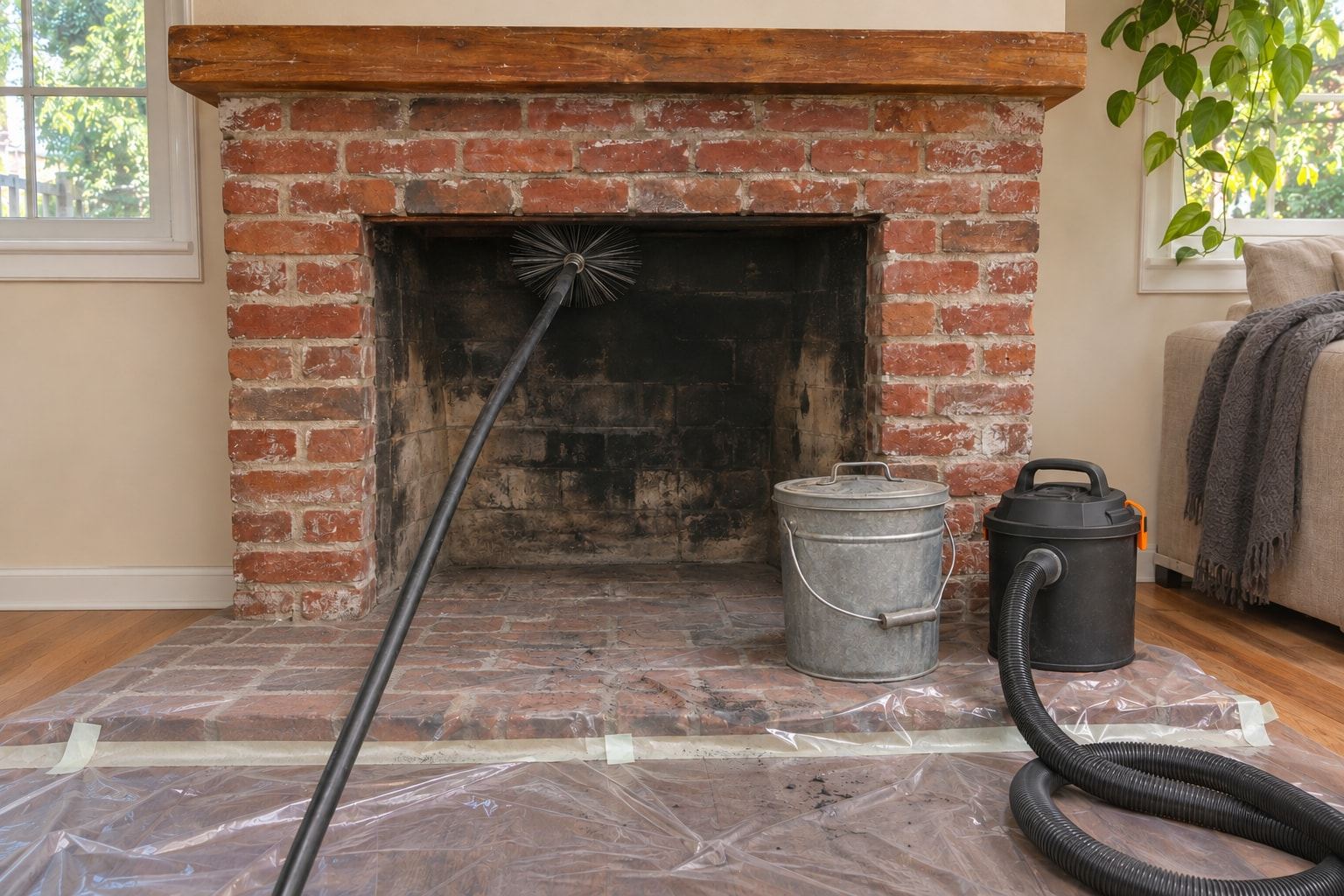
A sweep is aimed at the first two. The fireplace opening is covered, the flue is brushed from end to end, the smoke chamber and shelf are cleaned, and the loosened material is vacuumed out so it does not end up on your floor. If we find glazed deposits, we show you where they are and tell you plainly that removing them is a job for a chimney specialist with other tools.
For a household that burns often, the point of a sweep is to keep deposits in the first stage, where they come off easily and are least likely to catch. National fire-safety guidance (NFPA 211) calls for chimneys to be checked every year and cleaned when they need it, and for a frequent burner that need comes around sooner.
One price for a Saratoga fireplace
The price for one wood-burning fireplace chimney does not change for a long driveway, a hillside lot or a busy week. If the house has several fireplaces, a stove or an insert, call to confirm before booking.
$149
Chimney Sweep
How quickly creosote builds up
Short answerHow fast does creosote build up in a chimney?
There is no fixed rate. It depends on how often you burn, how dry the wood is and how the fire burns. Damp or freshly split wood, smoldering overnight fires and a cold chimney on an outside wall all speed it up. Frequent burners should look up the flue during the season, not only once a year.
Saratoga: foothills, oaks and fire season
A few things about the town shape how its chimneys are used, and what owners pay attention to.
- At the edge of the Santa Cruz Mountains
- Saratoga sits at the base of the range, and Highway 9 climbs from the Village up toward Skyline. On the higher streets, a chimney often stands on a slope, exposed on several sides, and a flue that stays cold makes more creosote.
- Large lots, hillside homes and oaks
- Much of Saratoga is private homes on large lots, some built into the hillside, with oaks all around. If you burn wood from your own trees, split it and give it time to dry before it goes on the grate; green oak smolders and coats the flue.
- Where houses meet the wildland
- Parts of the town border open, wooded land, and during fire season people here are more careful with anything that throws sparks, chimneys included. We sweep the flue; the cap and spark screen are work for a chimney contractor, but if we see one damaged or missing we will mention it.
- Across town
- Same visit and price throughout Saratoga. Neighborhoods and our other services here are on the Saratoga service area page. Just over the line? Cupertino, Campbell and San Jose get the same price and visit.
Signs of creosote buildup
Go through these with a flashlight and a cold fireplace. Anything in the lower half of the list means no fire until the chimney has been swept or looked at.
-
Black, flaky bits falling onto the grate or the hearth
Loose soot coming away from the flue walls. The easiest kind to brush out, and a sign it is time to book.
-
Thick dark crust on the damper or the walls just above the firebox
Deposits building up in the throat and lower flue, usually matched by more of the same higher up.
-
A strong tar or campfire smell from the fireplace on damp days
Creosote in the flue giving off its smell when the air is humid. Common in a chimney that is used a lot.
-
Heavy, dark smoke from the chimney top
Wet wood or a smoldering fire. The smoke itself is the material that becomes creosote.
-
Smoke drifting into the room when the fireplace used to draw cleanly
The flue may be narrowed by deposits or partly blocked. Put the fire out and have it swept.
-
Shiny, tar-like streaks or drips near the top of the opening
Glazed creosote. A sweep removes what will come off; the rest needs a chimney specialist.
-
Puffy, honeycomb-like flakes on the roof or in the firebox after a loud rushing sound
Signs of a past chimney fire. Stop using the fireplace and have the chimney looked at by a chimney professional before the next fire.
The short version
Short answerWhat are the signs of creosote buildup?
Black flakes falling into the firebox, a dark crust on the damper, a tar or campfire smell from the fireplace, and smoke drifting into the room instead of up the flue. Shiny, glazed streaks near the top of the opening mean heavier buildup. Any of these is a reason to book a sweep before the next fire.
Questions from Saratoga wood burners
- We have a fire almost every night from November through March. How often should we get the chimney swept?
- More often than a household that burns a few times a winter. The guidance is to check the chimney every year and clean it when it needs it. With nightly fires, look up the flue mid-season: once you see a crust you can scrape with a fingernail, book a sweep.
- Can you get rid of glazed creosote?
- Brushing takes off soot and flaky deposits. A hard glaze often stays on. We will show you where it is and point you to a chimney specialist who uses other methods.
- Is spring a good time to have the chimney swept?
- Yes. Deposits left in the flue all summer can give off that tar smell on damp days, and a spring sweep means the fireplace is ready the first cool evening in fall.
- Do you come up to the hillside homes off Highway 9?
- Yes, all of Saratoga is in our area. When you book, mention a steep or narrow driveway, a tall chimney or a locked gate so we arrive prepared.
Burning most nights? Keep the flue in the easy stage.
Call (415) 980-6169, answered 24/7, or book online and choose a visit time. Tell us how often you burn and what kind of fireplace you have.