Fremont, CA · Alameda County
Dryer Vent Cleaning in Fremont, CA
Whether your dryer vent ends at a flap on a side wall or a cap on the roof changes how it gets cleaned and how quietly it can clog. One fixed price, $149, applies either way. Book online or call us at any hour, and mention where your vent comes out.
Wall exit or roof exit, the price is the same
$149 for a residential dryer vent in Fremont, whichever way it leaves the house. A roof exit needs one extra step before the visit: tell the assistant when you book, so access to the cap can be confirmed.
$149
Dryer Vent Cleaning
Fremont homes and where their dryers vent
Fremont is the one Alameda County city on our list, and its housing spans more than a century. The age and layout of a house usually decide where the dryer vent comes out.
- Early 20th-century homes in the older districts
- These houses were built long before home clothes dryers were common, so every dryer vent in them was added later. The route follows whatever space the remodeler had to work with: out a side wall, down through a crawlspace, or up and out through the roof.
- Tract neighborhoods from the second half of the century
- Much of the city filled in with tract homes over the following decades. A single-story house with the laundry on an outside wall often vents straight through that wall. A two-story house with an interior or upstairs laundry is more likely to send the vent up and out through the roof.
- New townhouses near Warm Springs/South Fremont BART
- Fremont has two BART stations, Fremont and Warm Springs/South Fremont, and new townhouses have gone up around Warm Springs. Laundry in these is often on an upper floor, and the vent may end high on a wall or on the roof. Check your HOA rules on exterior and roof access before the visit.
Short answerWho cleans dryer vents in Fremont, CA?
From older houses in the original districts to townhouses near Warm Springs BART, Fresh Air Duct Cleaning cleans home dryer vents in Fremont for $149, connector to outside exit. Wall exits are routine; for a roof exit, mention it when you book so access can be confirmed. Visits run daily, 7:00 AM to 7:00 PM, and (415) 980-6169 is answered 24/7.
Roof exit vs. wall exit
The vent does the same job either way: it carries hot, damp, lint-filled air out of the house. What changes is the path the lint takes and where it tends to stop.
Wall exit
- Usually a shorter, more level run from the dryer to the outside
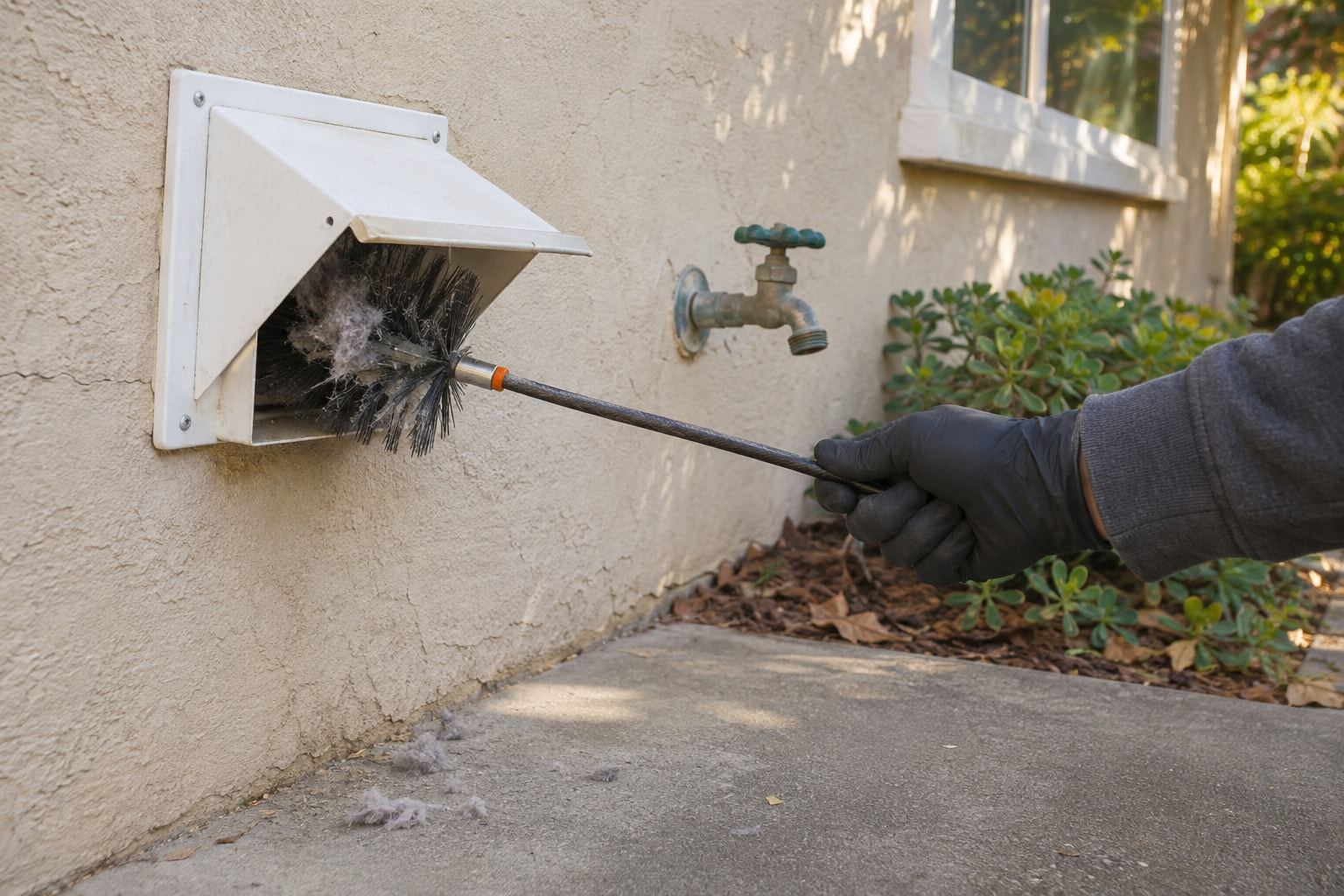
- The hood is reachable from the ground or a ladder, so the flap can be cleared from outside
- Lint packs mostly at the hood and at the first bend behind the dryer
- Easy to keep an eye on: stand outside and watch the flap while a load runs
Roof exit
- The run climbs through a wall or the attic, so the dryer has to push air uphill
- Lint that loses speed on the climb falls back and gathers at the bottom bend
- The cap is hard to see from the ground, so a blocked one can go unnoticed for a long time
- Much of the run can be reached from inside; getting to the cap depends on the roof, so we confirm access first
Neither layout is wrong, but a roof exit hides its problems better. If yours goes through the roof, watch drying time closely and describe the roof when you book online.
Short answerCan a dryer vent that goes through the roof be cleaned?
Yes. Much of a roof vent can be brushed and vacuumed from the laundry room end, working up toward the cap. The cap itself is the part that depends on access: roof height, pitch and roofing material all matter. Tell us about the roof when you book, and we will confirm before the visit is set.
Why roof vents need closer attention
A dryer's blower is made to push air along a vent, and a level run makes that easy. Send the same air up a vertical climb and gravity starts working against the lint. As the air slows at each turn, heavier fiber drops back down toward the dryer and settles at the base of the climb, usually in the elbow where the run turns upward.
Moisture plays a part as well. Warm, damp air from the dryer meets a cooler stretch where the vent passes through the attic, and some of that moisture can condense on the inside of the pipe. Damp lint clings to the walls instead of blowing through, and it builds on itself from there.
Then there is the cap. You can see a wall flap from your yard; a roof cap, mostly not. Some caps come with a screen meant to keep birds out, and on a dryer exhaust a screen catches lint. If drying has slowed and nothing looks wrong at ground level, the roof cap is the first suspect.
The dryer vent cleaning page lists what every visit includes, and the Fremont service area page shows the other services we bring to the city.
Booking from Fremont
The basics, wherever your vent comes out.
- Phone
- (415) 980-6169 Calls answered 24/7
- Online booking
- Book online Opens the booking window
- Cleaning visits
- Open 7 days, 7am–7pm
- Calls
- Calls answered 24/7
- Dryer vents
- Recommended cleaning about every 6 months
Clues by exit type
Some signs point at a wall hood, others at a roof run. Here is how to read them before you call.
-
The wall flap stays shut while the dryer runs
The hood is packed with lint or something has nested in the opening. This is normally cleared from outside during the visit.
-
Gray fuzz on the siding around the wall hood
Lint is escaping around a partly blocked flap instead of passing through it.
-
Drying slows, but everything outside looks normal
Typical of a roof exit: the cap or the low bend at the base of the climb is filling where you cannot see it.
-
Damp lint or drips at the dryer connection
Moisture is condensing in a cool section of the run and running back down. Long vertical runs through an attic are the usual setting.
-
The laundry room turns warm and muggy during a load
Air is not leaving fast enough and leaks out at the connector. Either exit type can do this once the run narrows.
Short answerIs a roof dryer vent or a wall dryer vent better?
A wall vent is usually the easier of the two: a shorter, more level run and a hood you can check from the yard. A roof vent works fine when kept clean, but lint settles at the bottom of the climb and a blocked cap is hard to spot. Either way, we recommend a cleaning about every 6 months.
FAQ
- Will you go up on my roof to clean the dryer vent cap?
- It depends on the roof. Tell the assistant how high it is, how steep, and what it is covered with when you book, and we will confirm whether the cap can be reached before the visit is set.
- Can you move my roof vent to a wall instead?
- No. We clean vents; rerouting one is a job for a contractor. We can tell you what we saw along the run, which is useful if you are weighing that change.
Tell us where your vent comes out
Call us at (415) 980-6169, answered 24/7, or book online. Fremont visits run daily, 7:00 AM to 7:00 PM.