Guide · Dryer vents
Where Lint Builds Up in a Dryer Vent, in Real Photos
The lint screen stops most of the fluff, but not all of it. What slips through rides the warm air until it finds a spot to settle. The photos below were taken during dryer vent cleanings in the Bay Area and show the three places where it piles up: the roof cap, the wall behind the dryer and the grille outside.
Short answerWhere does lint build up in a dryer vent?
Lint settles wherever the air slows down. In most homes that means three spots: the cap at the end of a roof vent, the opening in the wall right behind the dryer, and any grille or screen on the outside exit. Bends and long runs through a ceiling collect it too, which is why the whole run gets brushed, not only the ends.
Why some lint always gets past the screen
Every load sheds fiber from towels, sheets and sweaters. The screen in the dryer door catches the big flakes you peel off after each cycle. The finest fiber is light enough to pass straight through the mesh, and it travels with the hot, damp air into the vent.
As long as that air moves fast, the lint keeps going and blows outside. Trouble starts where the air loses speed: at a turn, at a long climb up to the roof, or at the very end of the run where it has to push open a flap or squeeze through a grille. Damp air leaves a thin film on the walls of the vent, and fiber sticks to it. Layer by layer, the opening gets smaller.
None of this is a sign of a bad dryer or a careless household. It happens in every vent. The only question is how fast, and that depends on how much laundry you do and how the vent is laid out.
Spot one: the cap on a roof vent
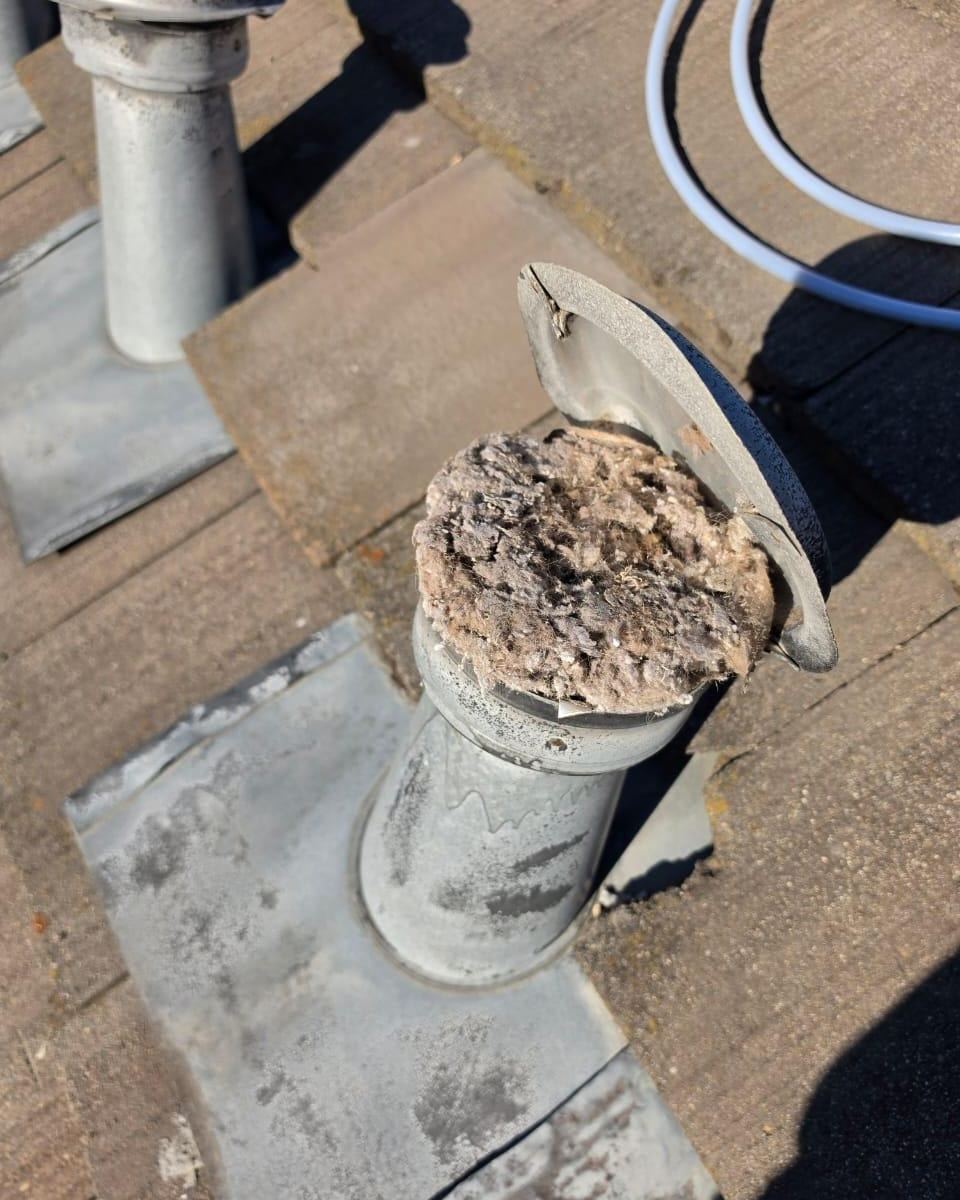
Many two-story homes, condos and townhomes in the Bay Area send the dryer vent up through the attic and out the roof. The air has to climb the whole way, and it slows down near the top. At the cap, a hinged lid keeps rain and birds out. That lid is where a roof vent most often chokes.
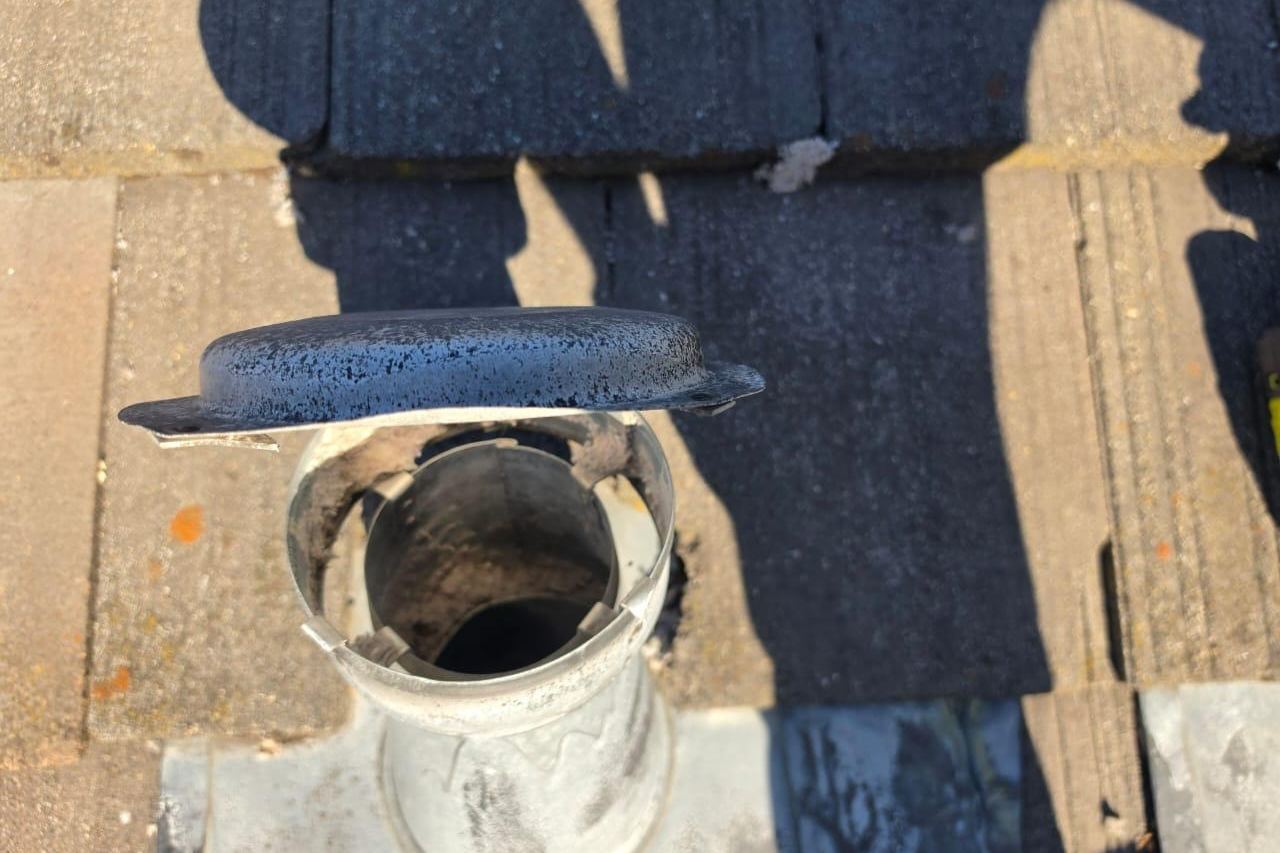
The first photo shows what that looks like. When the lid was lifted, the opening was packed with a solid plug of gray lint, tight enough to hold its shape. Air from the dryer was barely getting out. The second photo shows the same cap after the run was cleared: the lid swings freely and you can see down into the pipe.
Clues you can spot without climbing onto the roof
Please stay off the roof. These signs show up from the ground or from inside the house:
- Clothes need a second cycle even though the lint screen is clean
- The dryer turns itself off early or feels hot on the outside of the cabinet
- From the yard, the lid on the roof cap stays shut or barely lifts while the dryer runs
- Gray lint collects on the roof around the cap or slides down into the gutter
- The laundry room feels warm and damp after a load
Short answerWhy do roof dryer vents clog faster than wall vents?
A roof vent is usually longer and runs uphill, so the air leaving the dryer loses speed before it reaches the top. Slow air drops its lint. The cap lid adds one more barrier at the very end. A wall vent with a short, straight run gives lint fewer places to stop, though it can still clog.
Spot two: the wall right behind the dryer
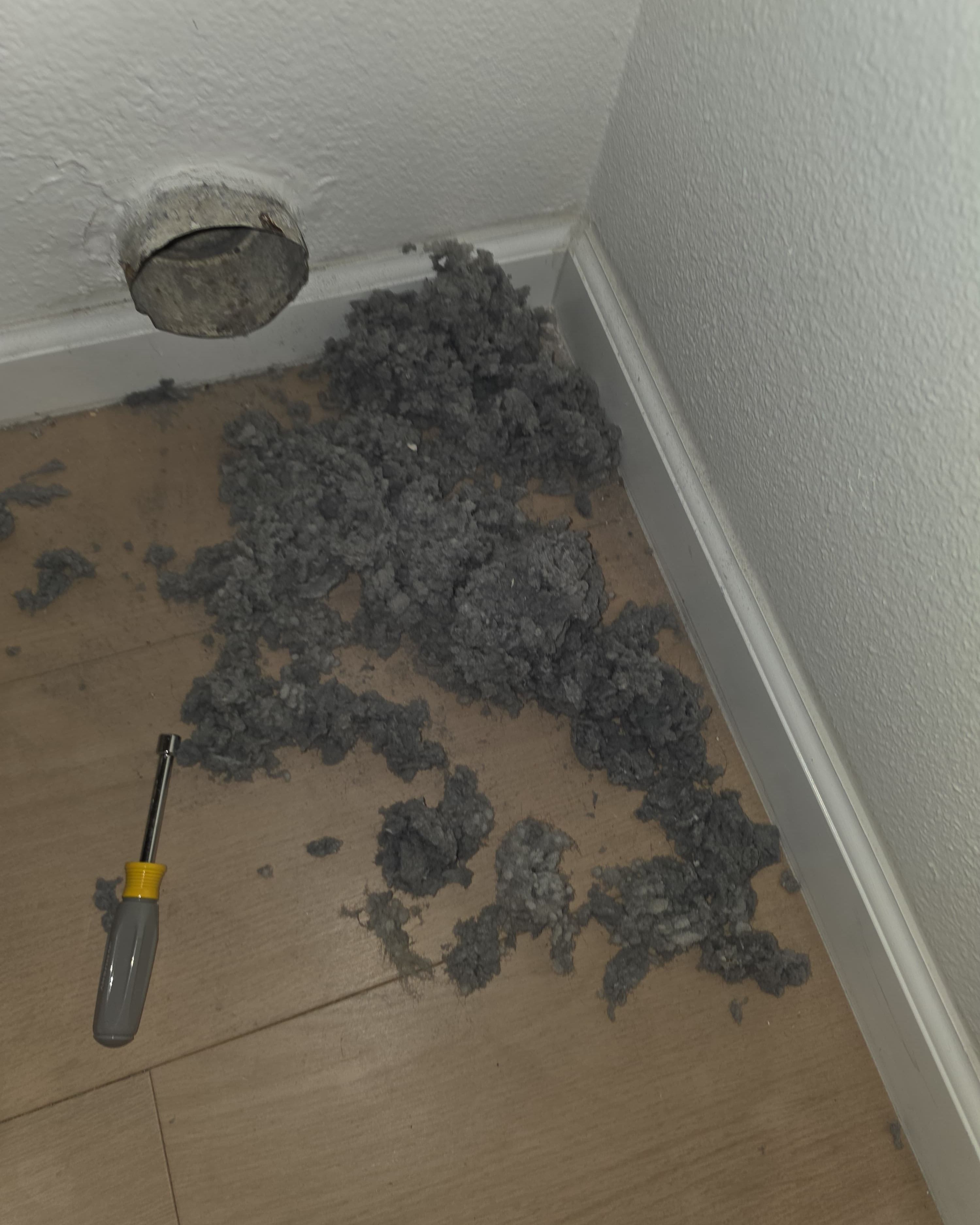
The flexible connector behind the dryer gets pushed, bent and squeezed every time the machine is moved. Where it meets the wall, the air makes its first sharp turn. Lint gathers there, and more of it piles up inside the wall opening, out of sight.
The photo below was taken in a laundry room after the dryer was eased away from the wall. Everything on the floor came out of that one wall opening. From the front of the dryer, nothing looked wrong.
What the laundry room tells you
-
Lint on the floor or the wall behind the dryer
Air is leaking at the connection because the path ahead of it is partly blocked.
-
A connector squeezed flat when the dryer is pushed back
Less room for air means lint catches at the narrow spot. Leave a few inches of space behind the machine.
-
A warm, stuffy room on laundry day
Hot air is backing up instead of leaving the house. Hold off on long cycles until the vent is cleared.
Read more: A warm, stuffy room on laundry day →
Spot three: a grille or screen on the outside exit
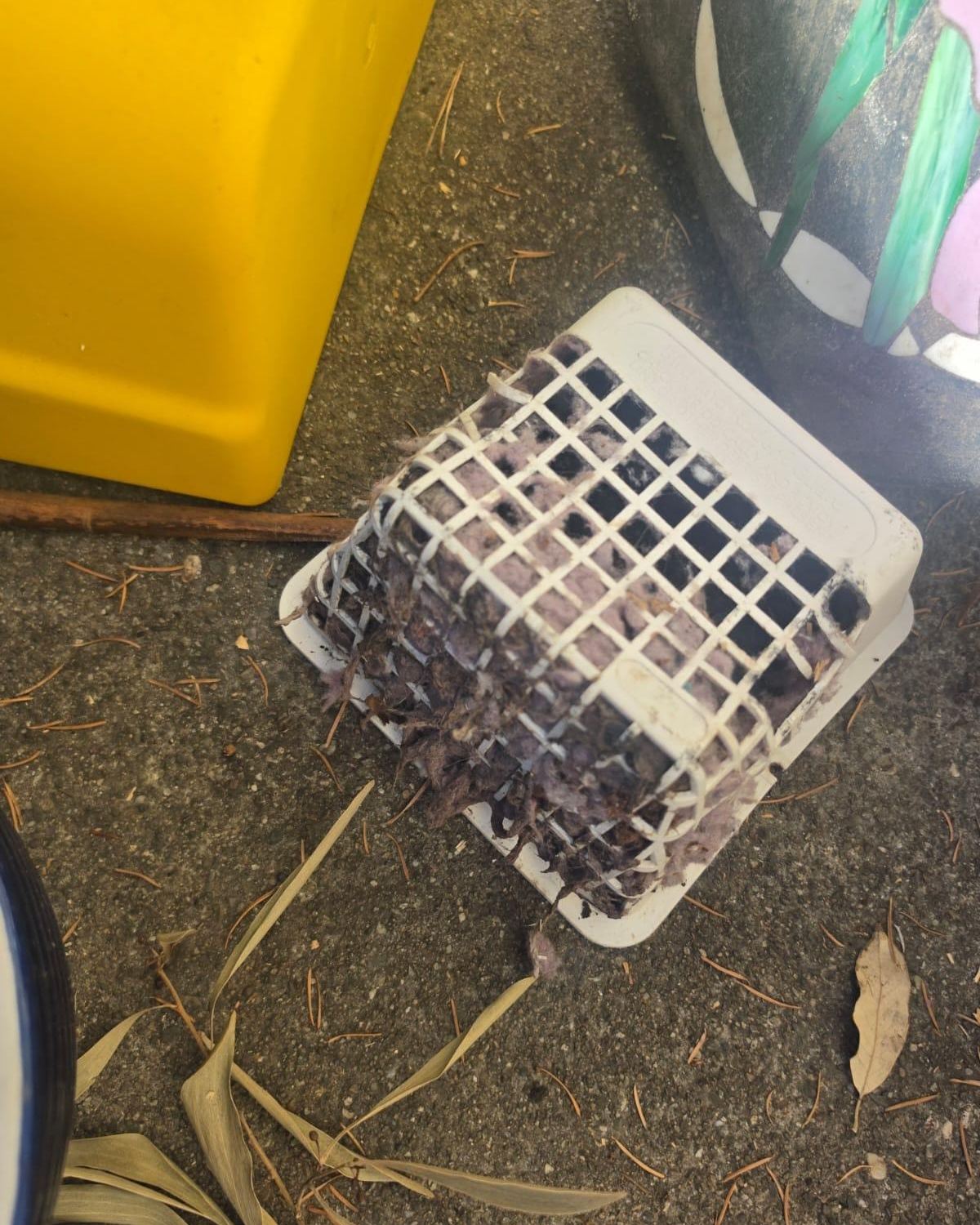
Vents that leave through a side wall or close to the ground often end in a hood with a flap. Some homes also have a cage, grille or screen fixed over that exit to keep birds and rodents out. It works for that, but it also catches every bit of lint that reaches it.
The cover in the next photo was taken off an outside exit. Its openings were filled with lint and dust, so air from the dryer could only seep through the edges. Ground-level exits also pick up leaves, mulch and dirt, which makes the plug build faster.
What you can check yourself, and what to leave for a cleaning
| Spot | What you can check | What a cleaning takes care of |
|---|---|---|
| Roof cap | From the yard, whether the lid lifts while the dryer runs, and lint on the roof or in the gutter | Clearing the run from inside and freeing the cap, when the roof can be reached safely |
| Wall behind the dryer | Lint on the floor behind the machine and a flattened connector | Moving the dryer out, clearing the connector and the wall opening, then reconnecting it |
| Outside grille or flap | Lint in the grille, a flap that does not open, weak airflow at the exit | Brushing the run through to the outside and clearing the hood and grille |
Emptying the lint screen before every load is still the single most useful habit. It does not reach the spots above, though, and a store-bought brush tends to push a packed plug further along instead of pulling it out. A professional cleaning brushes and vacuums the full run from the dryer to the outside.
We clean a residential dryer vent for $149 and suggest doing it about every 6 months. If your vent exits on the roof, mention it when you book so the assistant can confirm the visit. You can read more on the dryer vent cleaning page or see every price on the pricing page.
Short answerHow often should a dryer vent be cleaned?
We recommend a dryer vent cleaning about every 6 months. A large family running the dryer every day, a long run through the ceiling or a roof exit can fill up sooner. Watch drying time, the flap outside and the floor behind the dryer, and book a cleaning when any of them change.
Seeing lint in one of these spots?
Call (415) 980-6169, answered 24/7, or book online. Visits run daily, 7:00 AM to 7:00 PM.
FAQ
- Can I clear the roof cap myself?
- We do not suggest climbing onto the roof for this. Clearing only the cap also leaves the lint that is still inside the run. Watch the cap from the ground and call when the lid stops lifting.
- Is it safe to keep using the dryer while the vent is clogged?
- Lint burns easily, and a blocked vent keeps hot air close to it. If you smell hot lint or the dryer feels unusually hot, stop using it and book a cleaning before the next load.
- Do you move the dryer and hook it back up?
- Yes. The dryer is eased away from the wall, the connector and the wall opening are cleared, and the machine is reconnected and run before we leave so you can feel air at the exit.
- Are the photos on this page from real cleanings?
- Yes. They were taken on dryer vent cleanings in the Bay Area. House numbers and other details that could identify a home are kept out of the frame.